Server corvax.dev
System state Connecting AI / unknown

Hardware & software

Arduino, ESP32 and Raspberry Pi projects, browser games and web applications.

Projects

AIR / 328 · ATmega328P

Room Terra / Arduino UNO Mini

A shared ecosystem running on an Arduino UNO Mini. Plants, herbivores and predators respond to readings from room sensors. The board advances the world and serves its website, including when no browser is connected.
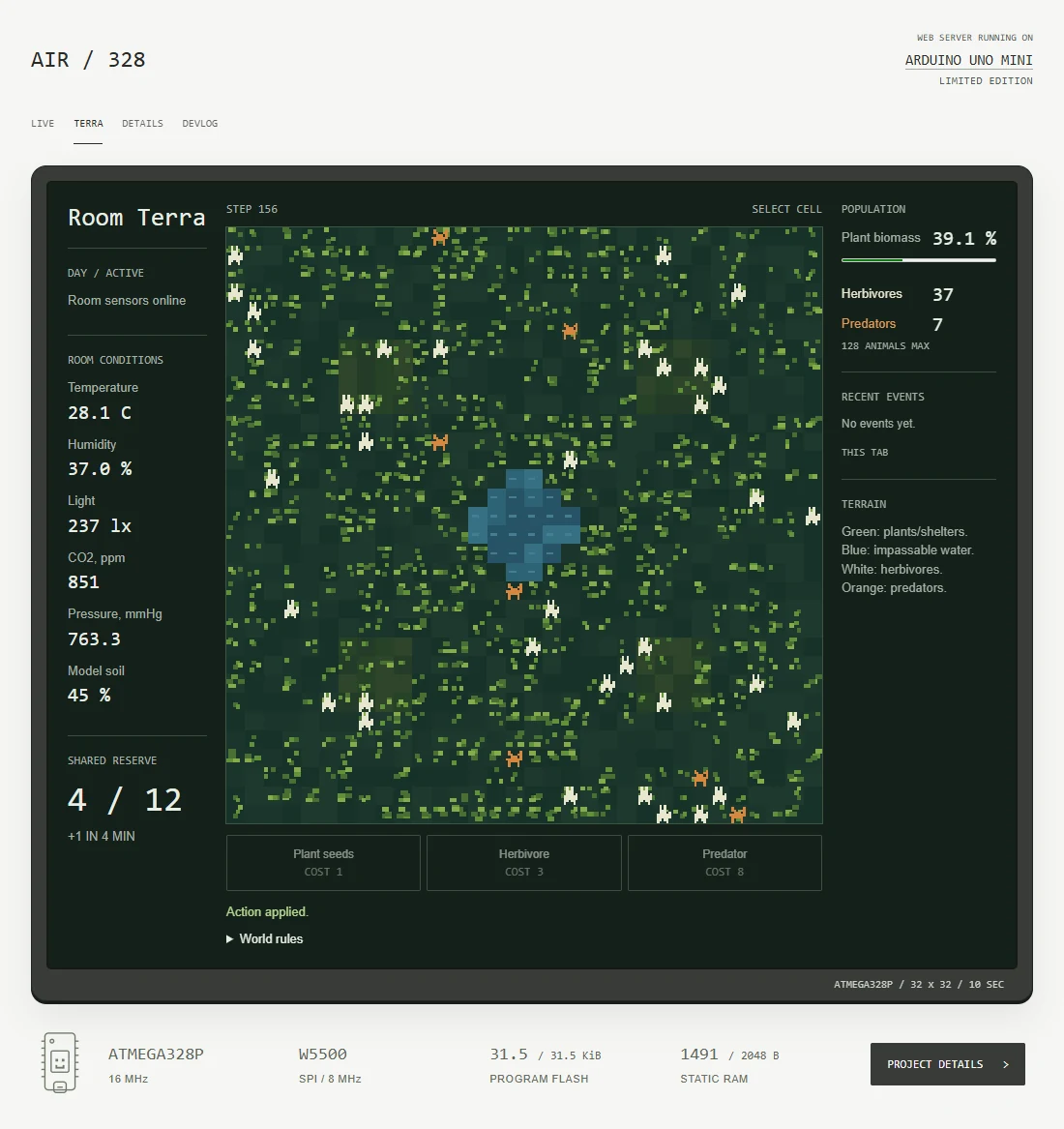
Room Terra: a shared map with plants, herbivores, predators, a pond and four shelters
Screenshot · 29 September 202632 × 32

Arduino UNO Mini

ATmega328P · 16 MHz
2 KiB SRAM · 32 KiB Flash

  1. Room sensors

    Temperature, humidity, light, CO₂ and pressure reach the board over I²C and PWM.

  2. World on the board

    Integer calculations, a 10-second step and up to 128 animals. Work is split into small operations so sensors and HTTP can keep running.

  3. Website over Ethernet

    W5500 handles TCP. The Arduino sends compressed HTML, CSS and JavaScript from Flash; the browser draws a 480-byte world snapshot.

World rules and technical details

Plants

Four biomass levels per cell. Light, moisture and temperature affect growth; grazing removes food from the map.

Herbivores

Choose safer cells with food. Eating restores energy; metabolism consumes it. Four shelters protect them from predators.

Predators

Hunt nearby prey when hungry. Reproduction requires energy, space and enough prey; starvation can eliminate a population.

Environment and terrain

The 32 × 32 map wraps at its edges. A 24-cell pond blocks movement and moistens its banks. Soil moisture gradually follows room humidity; CO₂ and pressure also affect growth. These are game rules, not a biological forecast.

Night follows the light sensor: 3 minutes at 25 lx or less switches to night; 3 minutes at 41 lx or more restores day. Readings between the thresholds keep the current mode.

One world for every visitor

Planting costs 1 credit, adding a herbivore 3 and a predator 8. Everyone shares a reserve of 12, replenished by 1 every 10 minutes. A successful action starts a shared 60-second cooldown.

Actions are checked and applied at a world-step boundary; failed actions cost nothing. Populations have no automatic rescue. The world lives in RAM and restarts when the board reboots.

Memory and delivery

Plants occupy 256 bytes: 2 bits per cell. Each animal fits in a 16-bit record. Four HTTP connections share a 512-byte workspace; compressed interface files stay in program memory.

The public site connects directly to the board over HTTP on port 8080. Source code, build instructions and simulation rules are on GitHub.
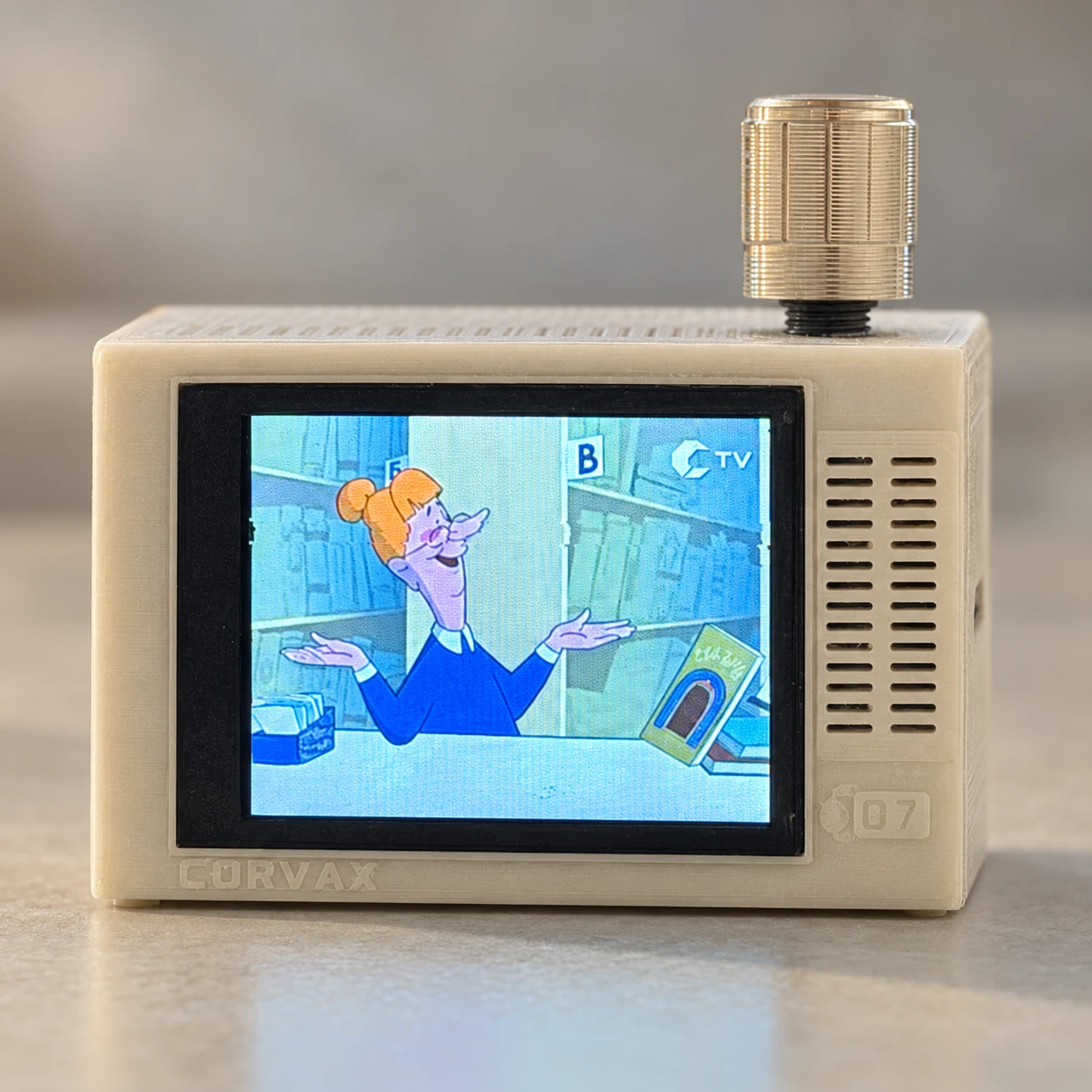
Assembled Corvax TV playing a video on its display

Corvax TV

A desk display on ESP32-S3: clock, weather, news, YouTube statistics, timers and local video.

320 × 240 · ESP32-S3 · microSD

About the project
Florarium website preview

Florarium

Sensor readings and equipment status for the florarium.

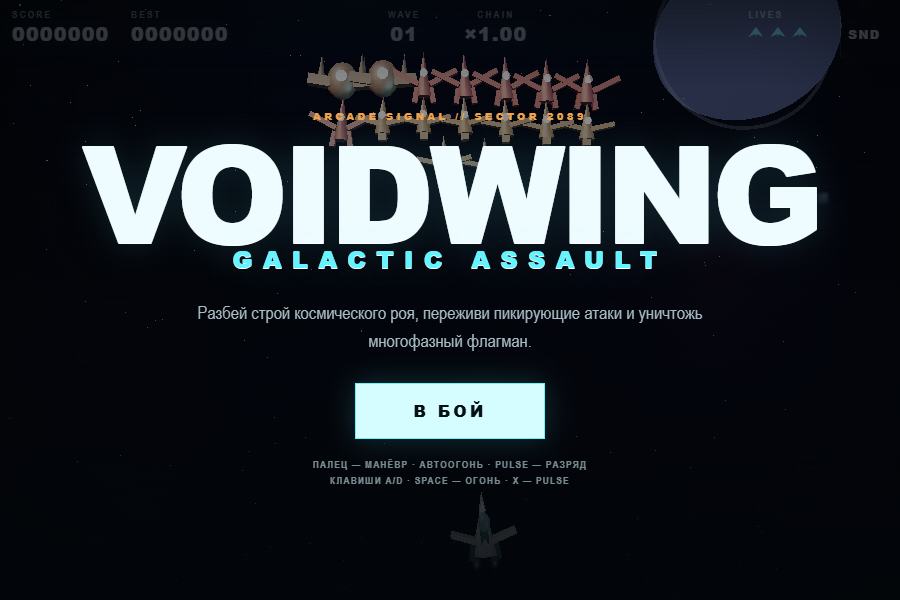
Voidwing website preview

Voidwing

A browser space shooter in 3D.

Core TraceSnake gameOpen game
SNAKE // CORE TRACE

DEMO

CORE TRACE

Collect the amber markers. Avoid walls and your tail.

Score
000
Best
000
Head
08:06
Rate
demo

Arrows / WASD to steer · Space to pause · Swipe on the field

Snake game on a 16 × 12 grid.

News

  1. Artificial intelligence

    Claude Code adds TypeScript mods for tools and interface customization

    Anthropic released TypeScript mods for Claude Code's CLI and desktop app. Distributed through plugins, they can rewrite prompts, intercept tool calls and replace built-in features. Mods are unsandboxed and have the same machine access as Claude Code.

    Teams can add a pane that tracks CI pipeline status beside the coding conversation as builds pass or fail.

    Anthropic ·

  2. Science

    Rice team observes a magnetic liquid crystal state in YbMnBi₂

    Neutron measurements found directional spin fluctuations in YbMnBi₂ above its magnetic ordering temperature. The effect was absent in CaMnBi₂. Calculations suggest that ytterbium moments and manganese spin fluctuations could explain the compound's anomalous Hall response.

    The measurements rule out bulk spin canting as the proposed cause, narrowing models of the compound's anomalous Hall effect.

    Rice University ·

  3. Space

    NASA plans an uncrewed Starliner test and crewed return by 2028

    Starliner-1 could launch in December 2026 or January 2027 to evaluate service-module thermal changes. NASA plans a crewed Starliner-2 mission by 2028, after further thruster modifications, testing and certification.

    NASA will work with Boeing and ULA to certify Vulcan for Starliner flights after Atlas V's final flight.

    NASA ·

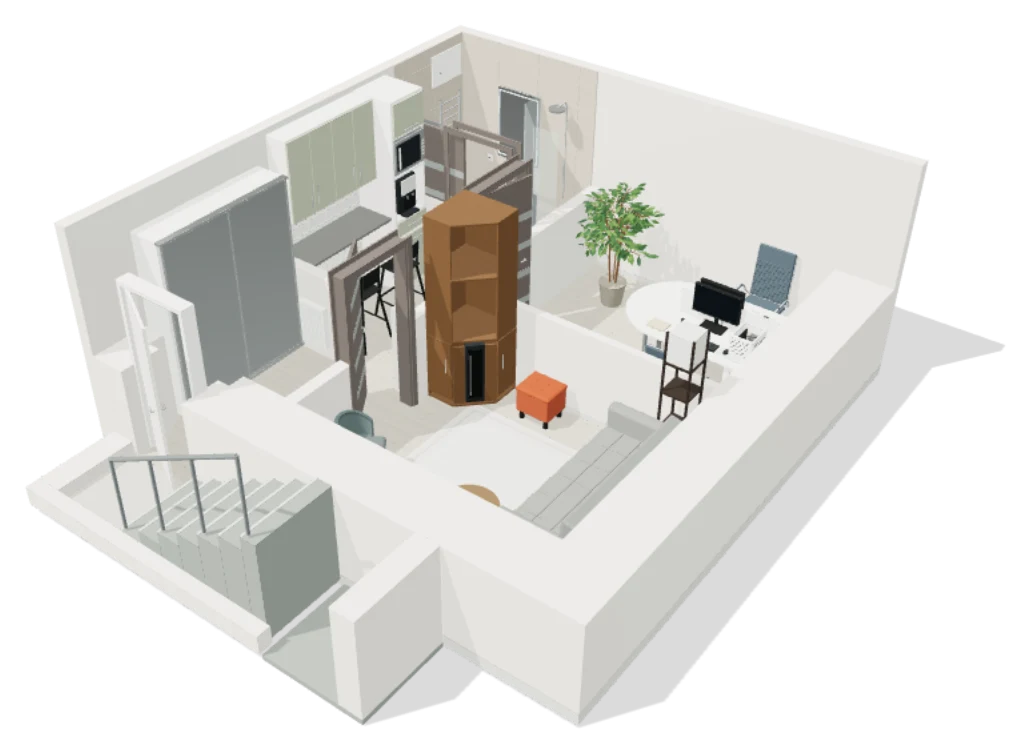
The workroom

A 3D model of the room where the projects are built.

Cutaway view of the workroom, with a desk, kitchen and seating area
Full view

Server

Waiting for server data.

CPU
--
Temperature
--
Memory
--
Storage
--

Measured -- ago

System details

Compute & storage

CPU utilization -- utilization 0%
Load averages
--1 min
--5 min
--15 min
Temperature
--
thermal state
Memory
--
used of total
Storage
--
used of total
Disk growth
--
last 24 hours

Network

Status API
--
status.json
History API
--
history.json
SSE stream
--
events
Inbound
--
current rate
Outbound
--
current rate

Telegram bot

Bot health --

public telegram state unavailable

Messages received--
Replies sent--
Inbound channel
Waiting for messages
Outbound channel
Waiting for replies
Waiting
--
processing --
Queue age
--
oldest queued item
Connections
--
ingress / outbound

Services

Automation

Network services

24h system history

Actual sample times. Gaps mark missing measurements.

Utilization %
CPU, memory and storage utilization Waiting for history.
Temperature °C
CPU temperature in degrees Celsius Waiting for history.
History is loading.

Loading history

Server details TLS, last boot and AI mode
Freshness
--
last good update age
TLS cert
--
expires
Last boot
AI mode
--
processing status